The Killing Fields: 25 Years of BSF Violence on the Bangladesh-India Border
A data-driven analysis of 25 years of BSF killings of Bangladeshi civilians, India's violations of international law, and Bangladesh's legal options for accountability.
Jan 10, 2026As climate displacement accelerates, Bangladesh launches a diplomatic offensive to establish legal frameworks for climate refugees. The 2026 strategy seeks to transform vulnerability into leverage, securing international support and legal recognition for climate-displaced persons.
Jan 7, 2026Analysis of international developments on the Rohingya crisis as Bangladesh faces pressure to repatriate refugees while Myanmar's civil war complicates any return scenario.
Jan 6, 2026For 15 years, India managed Bangladesh through Sheikh Hasina. That era is over. New Delhi must now choose between treating Bangladesh as an equal partner or accelerating its loss of influence in the region.
Jan 1, 2026Indian media created a caricature of Shaheed Osman Hadi as a 'radical Islamist extremist.' The truth reveals a principled advocate for Bangladesh's sovereignty who paid the ultimate price for his convictions.
Jan 1, 2026Indian media's 'Islamist coup' narrative systematically distorts the nature of Bangladesh's July 2024 revolution, erasing student agency and democratic aspirations to serve political agendas in New Delhi.
Jan 1, 2026As artificial intelligence transforms global power structures, Bangladesh faces critical decisions about digital sovereignty. The country can become a data colony supplying raw material for foreign AI companies, or it can build domestic capacity for the AI economy.
Jan 5, 2026International recognition of Bangladesh's climate diplomacy transformation from aid recipient to Global South agenda-setter, positioning Dhaka as a key player ahead of COP31 climate negotiations.
Jan 2, 2026India's Northeast — the 'Seven Sisters' with 40 million people — is connected to the Indian mainland by only a 22 km strip of land. Dhaka holds the key to solving India's geographic nightmare, but Bangladesh has never leveraged this advantage. The post-August 2024 era demands strategic recalibration.
Dec 26, 2025Major global powers have historically viewed Bangladesh not as an independent actor but through an 'India lens' — treating Dhaka as a subset of Delhi policy. This prism distorts how Washington, Tokyo, Moscow, and Brussels engage with a nation of 170 million, but post-August 2024 dynamics are forcing a recalibration.
Dec 25, 2025A comprehensive timeline and analysis of the unprecedented collapse in India-Bangladesh relations, from the Hadi assassination to visa suspensions.
Dec 25, 2025India's Bangladesh policy is driven by short-term electoral calculations—Hindu persecution narratives, anti-Bangladesh rhetoric, and support for a controllable ally—at catastrophic cost to India's long-term strategic interests.
Dec 17, 2025
"The struggle for justice is not a sprint but a marathon. Each generation must carry the torch forward, never letting the flame of liberation die."
Osman Hadi was a visionary cultural activist and founder of the Inqilab Cultural Centre—a space that nurtured revolutionary thought, artistic expression, and political consciousness in Bangladesh.
His work transcended the boundaries between culture and politics, recognizing that true liberation requires transformation of both material conditions and collective consciousness.
Hadi believed that Bangladesh's future depended on developing independent foreign policy thinking, economic self-reliance, and a revival of the spirit that drove the Liberation War of 1971.
The Inqilab Delta Forum continues his mission, applying his principles to contemporary challenges in political economy, strategic affairs, and governance. His sacrifice will not be forgotten.
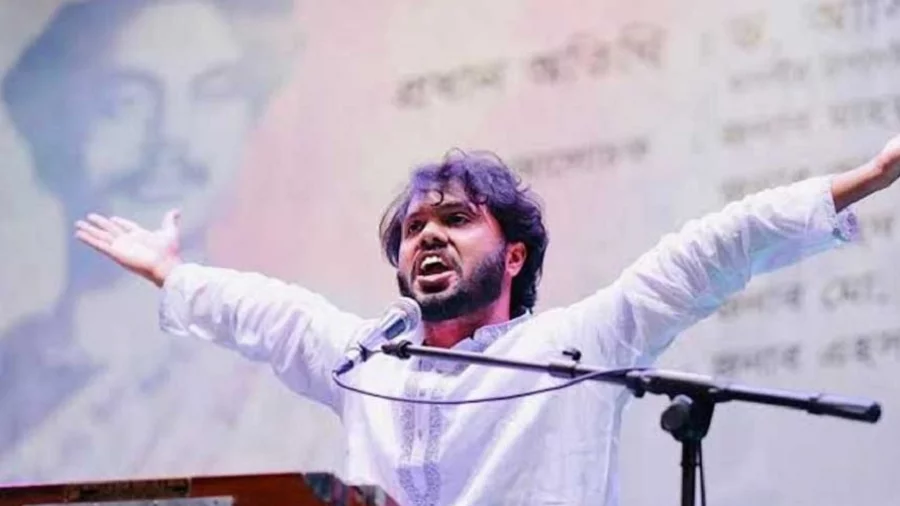
Inqilab Delta Forum is the intellectual arm of the Inqilab movement — a political economy think tank dedicated to preserving Shaheed Osman Hadi's legacy and advancing Bangladesh's strategic interests through rigorous analysis.
We are modeled on world-class think tanks like the Atlantic Council, but with a critical difference: we represent the Global South perspective, not Western hegemony. Counter-hegemonic, sovereignty-focused, Bangladesh-first.
Our work spans political economy, foreign policy, governance, and security — always with an eye toward a Noya Bangladesh: a sovereign nation where justice prevails, the economy serves the people, and Bangladesh leads in the region.
We are more than an organization—we are a promise. Whether you're a researcher, activist, student, or concerned citizen, we welcome all who refuse to stay silent in the face of injustice.
Ever vigilant, ever defiant — Inqilab Delta.
Contact Us